
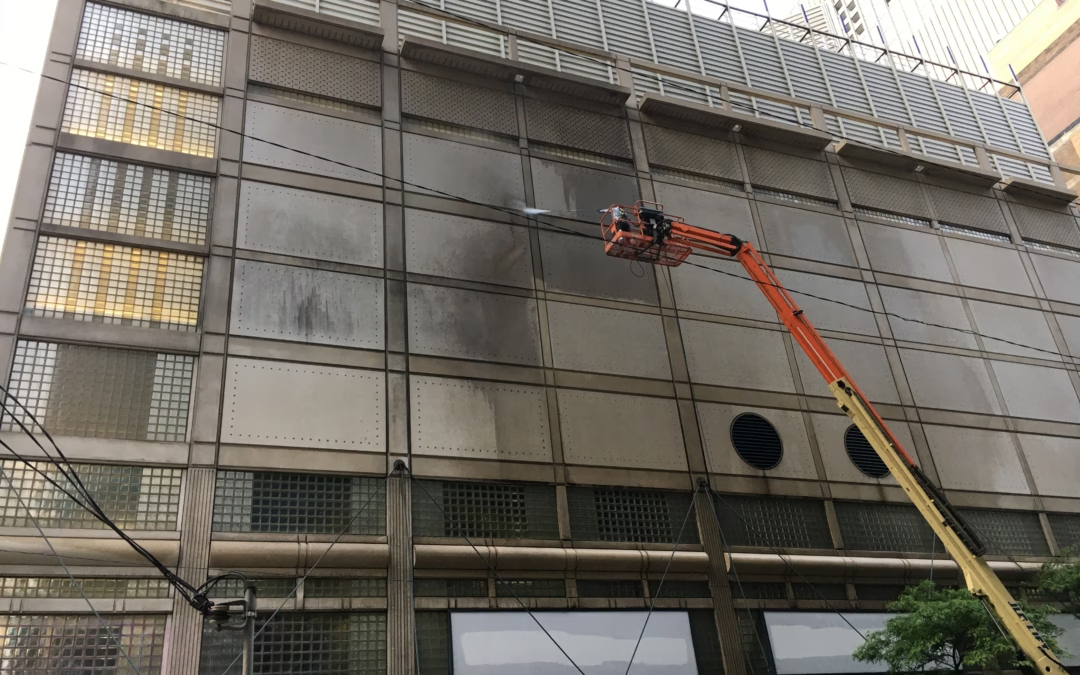
How Chicago’s Air Pollution Is Quietly Damaging Brick & Limestone Buildings
Chicago is known worldwide for its architecture. From historic greystones and early 20th-century brick buildings to limestone-clad residences and commercial facades, masonry defines much of the city’s visual identity.
What many property owners don’t realize is that long-term exposure to urban air pollution is gradually altering and, in some cases, damaging these materials.
After more than 40 years cleaning brick and limestone throughout Chicago, we’ve seen firsthand how atmospheric contamination affects building exteriors over time.
What Is Atmospheric Pollution?
In urban environments like Chicago, airborne contaminants include:
-
Carbon particulates from vehicle emissions
-
Industrial residue
-
Soot and combustion byproducts
-
Airborne dust and environmental debris
These particles settle onto building surfaces and bond to masonry materials.
Over time, they penetrate porous surfaces such as brick and limestone.
Why Limestone Is Especially Vulnerable
Limestone is composed primarily of calcium carbonate.
When exposed to atmospheric pollution combined with moisture, chemical reactions can occur that:
-
Darken the surface
-
Create carbon staining
-
Form crust layers
-
Trap additional contaminants
Because limestone is porous and relatively soft, improper cleaning can worsen the damage.
In several Chicago neighborhoods, we’ve evaluated newly constructed homes where aggressive cleaning permanently etched limestone facades — turning a routine maintenance project into a costly restoration issue.
Brick & Carbon Staining
Brick also absorbs airborne pollutants.
Blonde and lighter-toned brick commonly found in Chicago can show:
-
Dark streaking
-
Uneven discoloration
-
Greenish reactions if improper restoration chemistry is used
Not all atmospheric staining can be removed with basic pressure washing. In many cases, restoration cleaners are necessary — but only when selected correctly for the substrate.


The Freeze-Thaw Multiplier Effect
Pollution alone is not the only issue.
Chicago’s freeze-thaw cycles compound the problem.
When contaminated moisture enters masonry pores and freezes, it expands. Over time, this contributes to:
-
Surface scaling
-
Micro-cracking
-
Spalling
-
Mortar joint deterioration
Maintenance becomes preservation.
Why Improper Cleaning Can Cause More Harm
Many assume that “pressure washing” is the solution.
However:
-
Excessive pressure can erode masonry
-
Incorrect chemical selection can burn brick
-
Acidic cleaners can permanently damage limestone
-
Restoration runoff can etch adjacent glass
Facade cleaning is material-specific restoration work — not general washing.
The Long-Term Cost of Neglect
Left untreated, atmospheric buildup can:
-
Accelerate surface deterioration
-
Increase future restoration costs
-
Reduce curb appeal
-
Affect property value
Regular, properly performed facade cleaning extends the life of Chicago’s masonry buildings.
Preserving Chicago’s Architectural Identity
Chicago’s architectural character depends heavily on masonry materials.
Protecting brick and limestone from pollution-related deterioration is not just about aesthetics — it’s about long-term preservation.
Property owners who understand how pollution affects their buildings can make better decisions about maintenance and restoration.
If you manage or own a brick or limestone building in Chicago and are evaluating facade cleaning options, professional assessment and proper method selection are critical.
About the Author
Douglas Simons has over 40 years of experience cleaning and restoring brick and limestone buildings throughout Chicago.