
The Definitive Guide to Building Pressure Washing in Chicago
Building pressure washing in Chicago is not a one-size-fits-all service.
From 2–6 story mixed-use buildings to residential greystones and commercial facades, each structure presents unique challenges based on material composition, contamination type, height, and surrounding conditions.
This guide explains the technical considerations involved in professional building pressure washing in Chicago — including substrate identification, contaminant classification, chemical selection, pressure control, and risk management.
The Types of Buildings Commonly Cleaned in Chicago
Most mid-rise properties in Chicago fall into one of these categories:
-
Brick commercial buildings
-
Brick & limestone mixed facades
-
Full limestone structures
-
Precast concrete panel buildings
-
Concrete block structures
-
Metal panel and modern cladding systems
-
Multi-unit residential buildings
-
Mixed-use retail/residential buildings
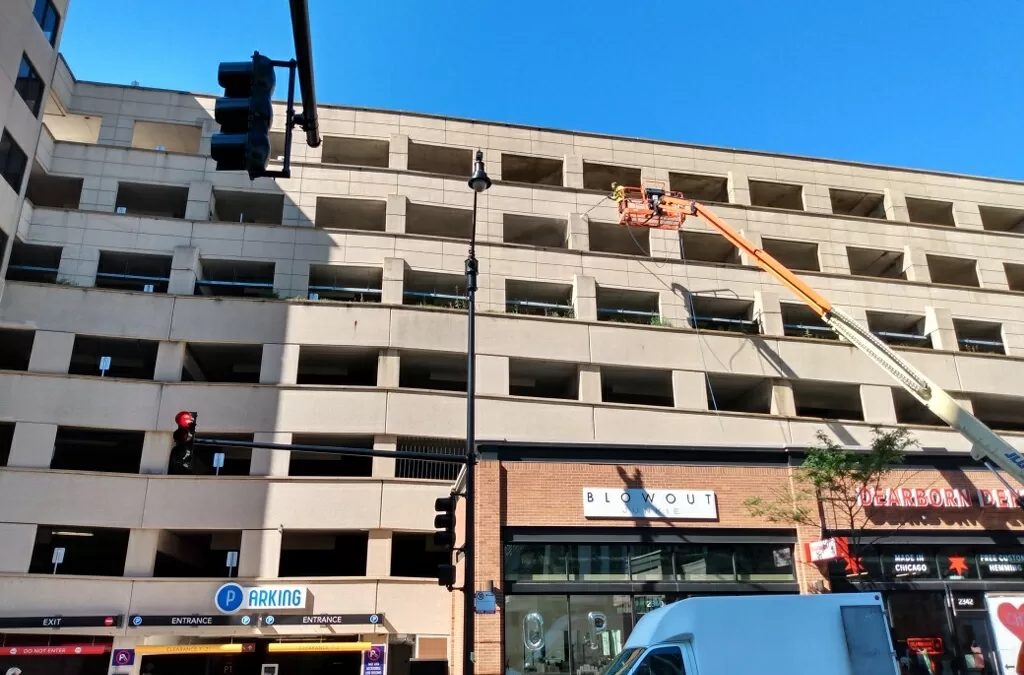
Most projects involve 2–6 story structures requiring ladder work, controlled access, or man lifts depending on height and configuration.
Access method alone influences cleaning strategy.
The Two Primary Contaminant Categories
Almost all building facade contamination in Chicago falls into two main classifications:
1. Atmospheric Contamination
Urban carbon pollution, soot, and airborne particulates accumulate over time. These contaminants bond to masonry surfaces and often penetrate porous substrates like brick and limestone.
Atmospheric contamination typically requires:
-
Restoration cleaners
-
Controlled dwell time
-
Low-pressure rinse methods
-
Careful sequencing
2. Biological Contamination
Mold, mildew, algae, and organic growth thrive in shaded, moisture-prone areas.
Biological contamination requires:
-
Specialty cleaning solutions
-
Proper surface saturation
-
Controlled steam or hot-water rinsing
-
Preventative treatment when needed
Understanding the difference between atmospheric and biological staining is critical. The wrong chemical selection can either fail to clean the surface or damage it.
Why Material Identification Matters
Each facade material requires a different process.
Brick
Brick can tolerate restoration cleaners under controlled application. Mortar condition must always be evaluated.
Limestone
Limestone is significantly softer and more chemically reactive. It can:
-
Etch under excessive pressure
-
Burn under acidic exposure
-
Discolor if improperly treated
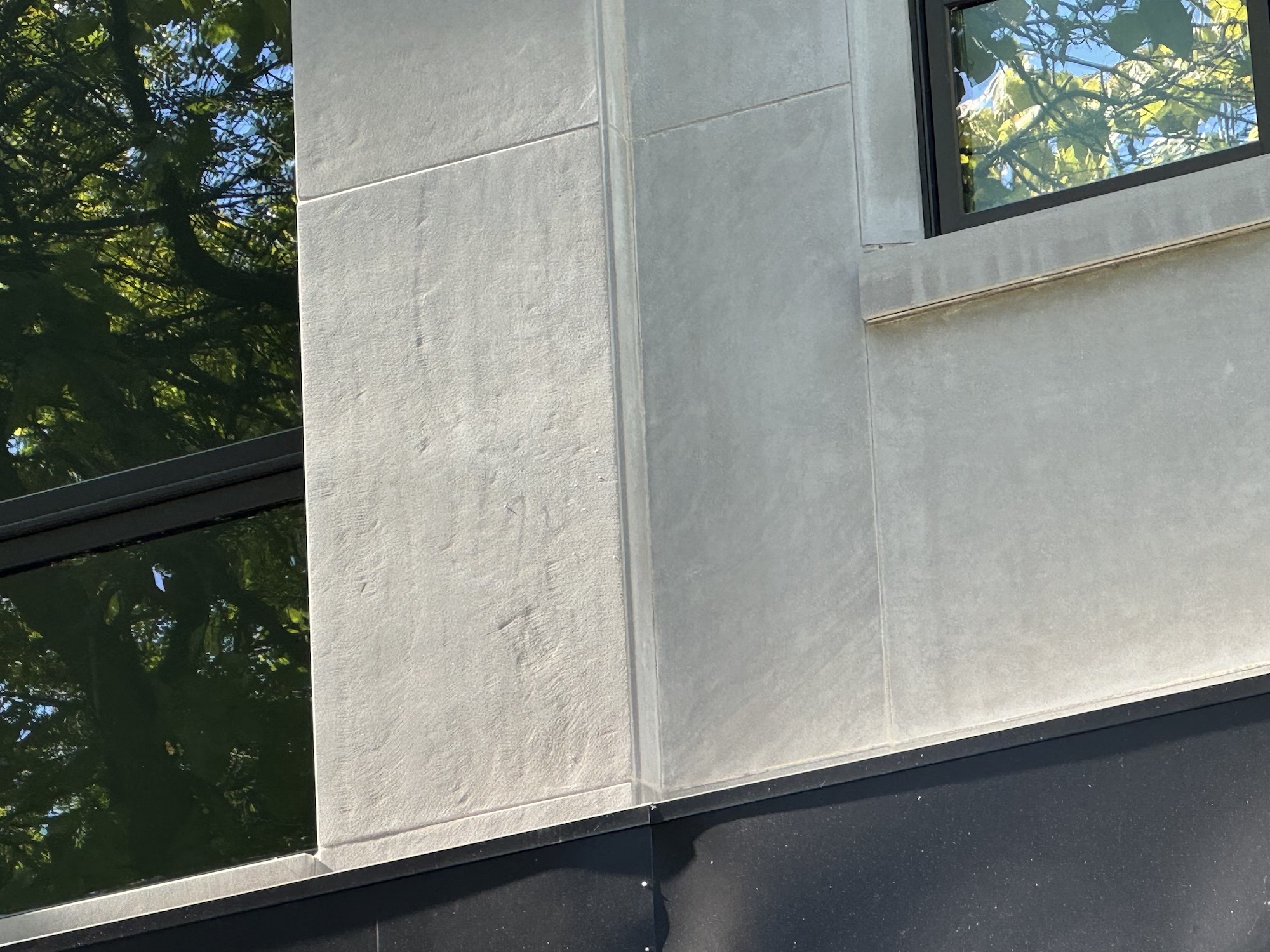
High-pressure cleaning or improper chemical use can permanently damage limestone surfaces.
In Chicago, there are documented cases of inexperienced contractors etching multi-million-dollar limestone facades through improper cleaning methods.
Surface preservation requires knowledge of calcium carbonate composition and restoration chemistry.
Precast & Concrete Panels
Precast and poured concrete panels often require atmospheric cleaning but are less chemically reactive than limestone.
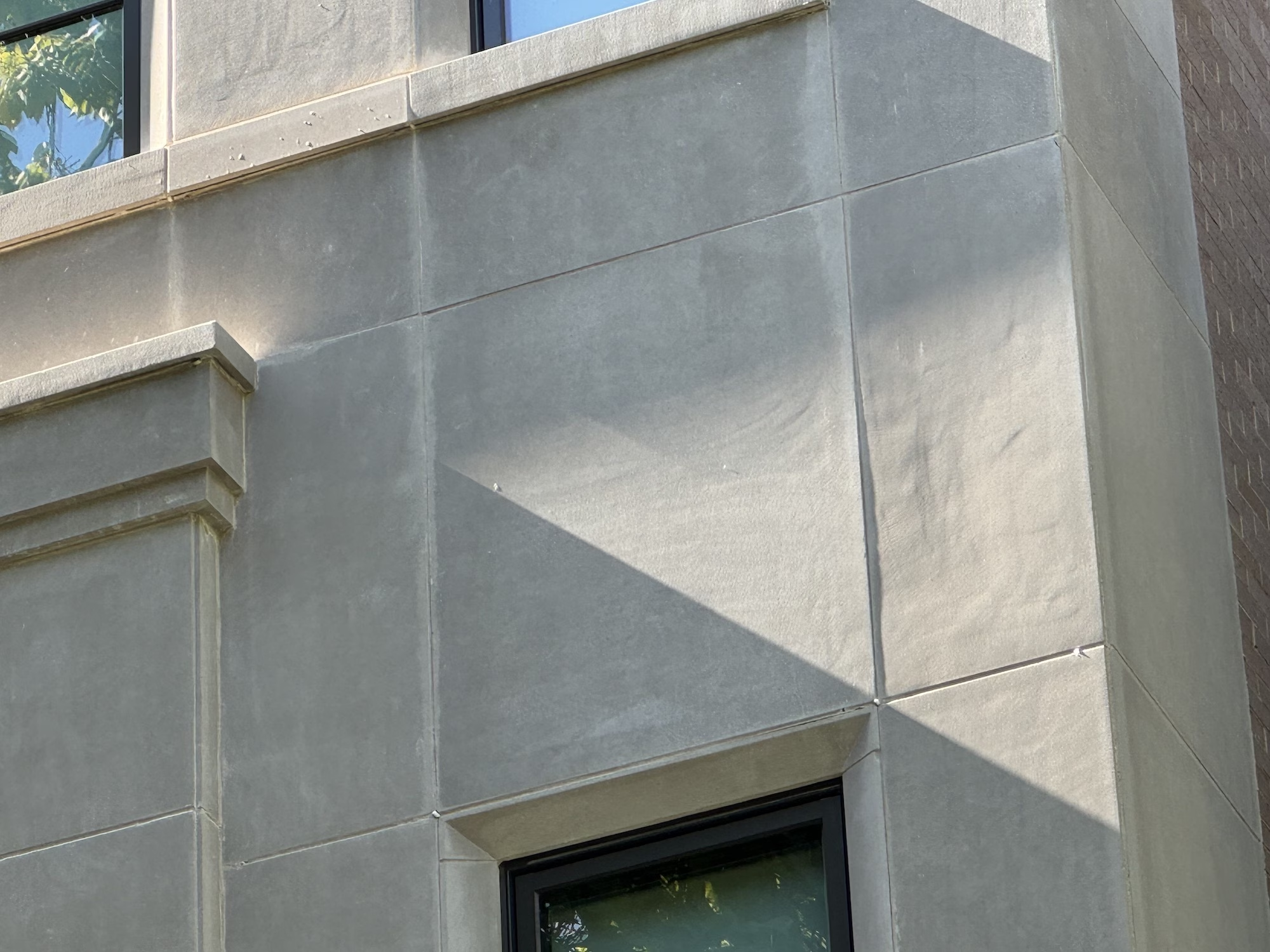
However, improper dwell time or inconsistent application can result in uneven appearance.
Metal Panels
Metal panel systems require non-corrosive cleaning agents and careful rinse control to prevent oxidation or streaking.
Restoration Cleaners: When to Use Them (And When Not To)
Restoration cleaners are often necessary for atmospheric carbon staining.
However:
-
They must be selected based on substrate.
-
They must be applied evenly.
-
Dwell time must be controlled.
-
Adjacent materials must be protected.
One commonly overlooked factor is glass protection.
Improper use of restoration cleaners can etch nearby glass surfaces if not properly masked or rinsed.
Cleaning is not isolated to one surface — the impact of chemistry and runoff must always be considered.
Steam vs Cold Water Cleaning
Steam pressure washing is often necessary for:
-
Heavy biological growth
-
Grease buildup
-
Certain carbon residues
However, steam alone does not replace restoration chemistry.
Choosing between steam and chemical restoration depends on contamination type and material sensitivity.
Access & Safety Considerations
Mid-rise Chicago buildings often require:
-
Ladder work
-
Man lifts
-
Controlled perimeter protection
-
Surface runoff management
Cleaning sequence matters. Starting at the wrong elevation or failing to manage runoff can result in streaking or inconsistent restoration.
What Can Go Wrong
Inexperienced building cleaning can result in:
-
Etched limestone
-
Mortar damage
-
Glass etching
-
Uneven facade coloration
-
Surface streaking
-
Chemical burns
-
Permanent discoloration
Some mistakes are cosmetic.
Some are extremely costly.
Building pressure washing is restoration work — not just spraying water.
Material-Specific Damage Caused by Improper Building Cleaning
Not all facade materials respond to cleaning the same way. One of the most common mistakes in building pressure washing is applying a single method across multiple substrates.
In Chicago, many buildings combine brick, limestone, concrete panels, and metal systems. Each requires a different chemical and pressure strategy.
Failure to recognize those differences can cause permanent surface damage.
Limestone Etching & Surface Alteration
Limestone is highly sensitive due to its calcium carbonate composition.
Improper pressure levels or incompatible restoration cleaners can:
-
Etch the surface
-
Burn the stone
-
Leave permanent texture changes
-
Create uneven color variation
Because limestone is softer than brick or concrete, aggressive methods often cause irreversible results.
Brick Burn & Color Distortion
Brick, particularly lighter or blonde brick commonly found in Chicago neighborhoods, reacts differently to restoration chemistry.
Using the wrong cleaner on blonde brick can result in:
-
Greenish discoloration
-
Surface staining
-
Uneven color tone
-
Mineral reaction marks
Blonde brick often requires an entirely different cleaning approach than darker masonry units.
Restoration chemistry must be selected based on:
-
Brick color
-
Mineral composition
-
Mortar type
-
Degree of contamination
Not all restoration cleaners are interchangeable.
Mortar Joint Damage
Even when brick itself tolerates cleaning, mortar joints may not.
Overexposure to aggressive chemicals or high pressure can:
-
Weaken joints
-
Cause joint erosion
-
Create uneven facade appearance
-
Accelerate moisture intrusion
Proper dwell control and rinse sequencing are critical.
Metal Panel Scratching & Etching
Modern commercial buildings often incorporate metal panel systems.
Improper cleaning methods can lead to:
-
Surface scratching
-
Oxidation marks
-
Chemical streaking
-
Etching of protective coatings
Metal panel systems require:
-
Non-corrosive cleaning agents
-
Soft application methods
-
Careful rinse control
-
Awareness of coating sensitivity
What works for masonry will often damage metal systems.
Glass Etching From Runoff
One commonly overlooked issue during facade restoration is glass protection.
Certain restoration cleaners, if allowed to dry on glass, can:
-
Etch window surfaces
-
Leave permanent haze
-
Create spotting or distortion
Professional building cleaning includes protecting adjacent materials and managing chemical runoff.
Cleaning One Area Affects the Next
Another factor rarely discussed is sequencing.
Cleaning must account for:
-
Runoff patterns
-
Surface transition points
-
Chemical interaction between materials
-
Elevation staging
Treating one material incorrectly can affect the appearance of adjacent surfaces.
Facade restoration is not isolated to a single wall — it is a coordinated process.
Experience Prevents Expensive Mistakes
Many forms of facade damage are not immediately visible. Some issues develop months later due to chemical overexposure or moisture intrusion.
Building pressure washing requires:
-
Material identification
-
Contaminant classification
-
Proper chemical matching
-
Pressure control
-
Environmental awareness
When done correctly, cleaning restores and preserves.
When done incorrectly, damage can be permanent.
Coordinating Mixed-Material Facades
Many Chicago buildings combine:
-
Brick
-
Limestone
-
Concrete panels
-
Metal accents
Each must be treated independently, even when cleaned during the same project.
Cleaning one material incorrectly can affect the appearance of the next.
Professional sequencing prevents cross-contamination and uneven results.
When to Schedule Building Pressure Washing in Chicago
Property managers typically schedule facade cleaning:
-
Every 2–5 years
-
After visible carbon staining
-
Following major construction
-
During capital improvement planning
Routine maintenance prevents heavy restoration needs later.
Professional Building Pressure Washing in Chicago
With over 40 years of experience cleaning Chicago buildings, we understand the technical differences between substrates, contaminants, and restoration methods.
If you are evaluating building pressure washing in Chicago for a commercial or residential property, proper assessment and process selection are critical.
📞 Call 312-384-0044 to request a building evaluation.